

.png?width=100&height=110&name=CPS-Logo-rgb-no-callout%20(1).png "CPS-Logo")
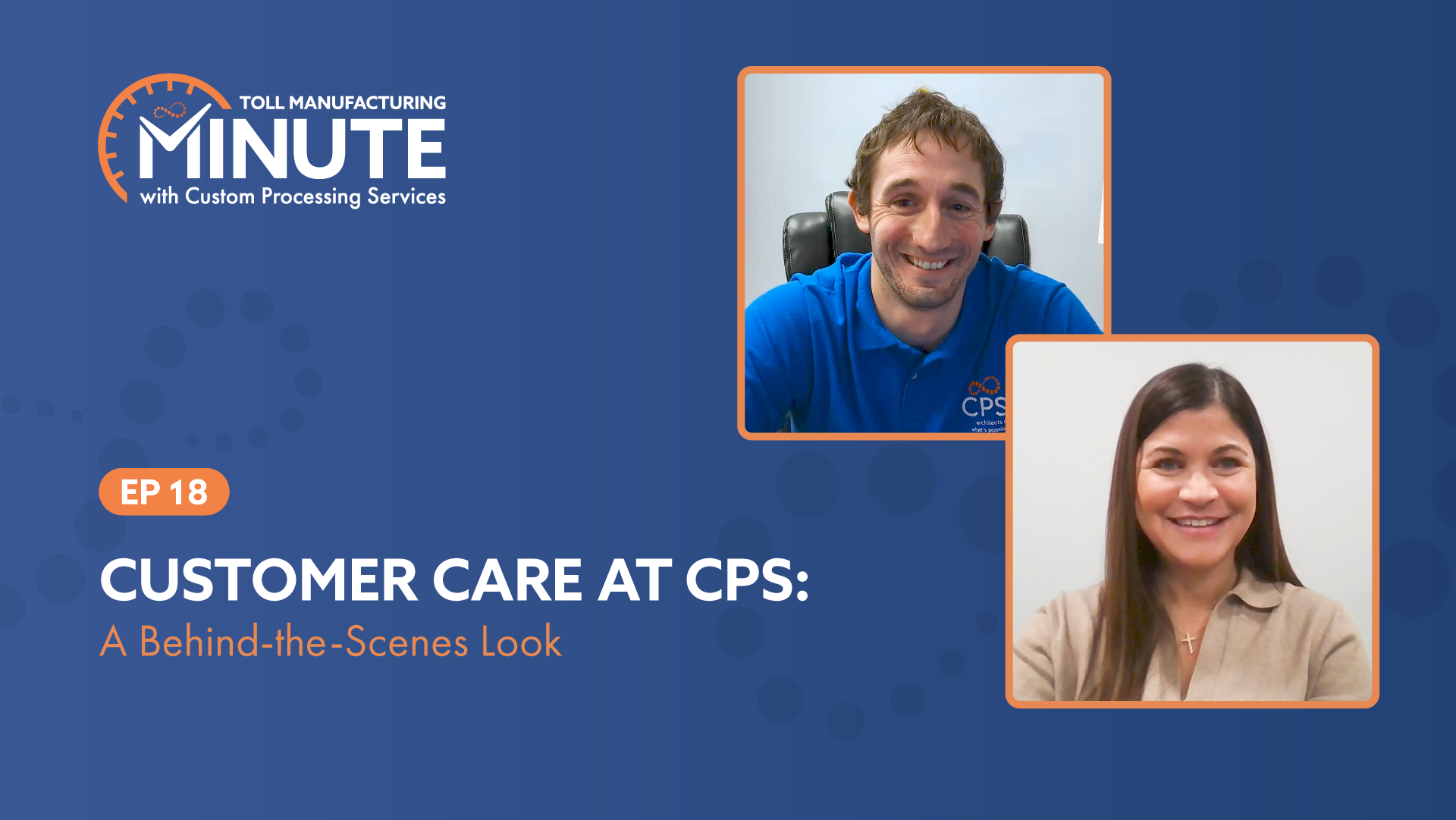
Toll Manufacturing Minute with CPS: Customer Care at CPS: What Happens After You Submit a Purchase Order

TL;DR:
Customer care at CPS goes far beyond processing. From translating purchase orders into actionable production plans to proactively communicating about timelines, materials, and conditions, CPS works as an extension of each customer’s team to prevent issues, keep projects on track, and support long-term partnerships.
When you submit a purchase order to Custom Processing Services (CPS), it might feel like the hard part is over. But behind the scenes, that PO sets a detailed, collaborative process in motion – one designed to keep your project running smoothly from start to finish.
In a recent episode of the Toll Manufacturing Minute podcast, Client Services Manager Mike Weinhold shared an inside look at how CPS approaches customer care and what happens after an order is placed.
Turning a Purchase Order Into a Production Plan
Once a PO comes in, the work begins with translation. CPS takes the customer’s language (quantities, timelines, and material details) and converts it into a format the entire organization can act on.
This internal translation ensures:
- Everyone understands what the order is
- Timing and deadlines are clearly communicated
- Production has the details needed to execute accurately
As Mike explains, “It’s about taking that information and converting it into language that goes out to everybody, so they understand what the order is, when it’s needed, and all the details.”
The Details Customers Don’t Always See
Some of the biggest factors affecting processing timelines aren’t always obvious. A few behind-the-scenes elements can have an outsized impact, including:
- Raw material delivery dates
Even an estimated arrival date helps CPS secure the right production window. When timelines shift, timely updates allow teams to adjust without unnecessary delays - Environmental conditions
Temperature and humidity can significantly affect processing rates. CPS teams monitor conditions closely to set realistic expectations and keep customers informed
Acting as the Voice of the Customer
At CPS, client services teams see themselves as a bridge between customers and internal teams. In daily production discussions, they actively ask, “What would the customer want us to do in this situation?”
That mindset helps balance what’s best for CPS operations with what’s best for the customer—creating solutions that support long-term partnerships, not just short-term wins.
Why Communication Is Central to Customer Care
Proactive communication is a cornerstone of CPS’s approach. While some customers prefer minimal updates and others want frequent check-ins, CPS adapts communication styles to meet individual preferences.
When questions arise, answers are rarely handled in isolation. CPS brings together subject matter experts across the organization, including:
- Production
- Quality
- Inventory
This cross-functional collaboration ensures customers receive accurate, well-informed responses … even if it takes extra coordination behind the scenes.
Real-World Problem Prevention
One of the most impactful ways CPS supports customers is by acting as their eyes and ears on the processing floor.
CPS teams are trained to watch for subtle changes that could signal a larger issue, such as:
- Color variations in raw materials
- Differences in particle size or shape
- Packaging or labeling inconsistencies
In one example Mike shared, identifying a color shift early helped prevent wasted production time and downstream application issues. The takeaway? Even small observations can make a big difference.
How Customers Can Help Keep Projects on Track
Clear communication goes both ways. According to Mike, customers can best support successful outcomes by providing:
- Accurate or estimated raw material arrival dates
- Updates when those dates shift
- Realistic timelines rather than a default “ASAP”
When CPS understands when material is truly needed, teams can prioritize more effectively, optimize schedules, and still meet customer deadlines.
Defining Success in Customer Care
For Mike and the CPS client services team, success is simple: helping customers look good within their own organizations.
By providing clear, accurate, and timely updates, CPS enables customers to:
- Confidently report progress
- Meet internal deadlines
- Maintain trust with stakeholders
Ultimately, CPS strives to feel like an extension of each customer’s business, offering consistent communication, proactive problem-solving, and support that leads to long-term partnerships.
Customer care at CPS is built on more than responsiveness; it’s supported by strong internal processes, clear communication, and alignment across teams. As Mike shared, that behind-the-scenes coordination allows CPS to adapt to changing conditions, prevent issues early, and support customers throughout the entire processing lifecycle.
To see how this approach is reinforced at an organizational level, we invite you to check out Building Operational Excellence at CPS, which explores how CPS’s leadership and teams work together to create consistency, accountability, and reliable outcomes for customers.