

.png?width=100&height=110&name=CPS-Logo-rgb-no-callout%20(1).png "CPS-Logo")
Advanced Battery Materials Powering Precision for
Toll Processing Solutions Tailored for Lithium-Ion,Solid-State, and Next-Gen Battery Technologies
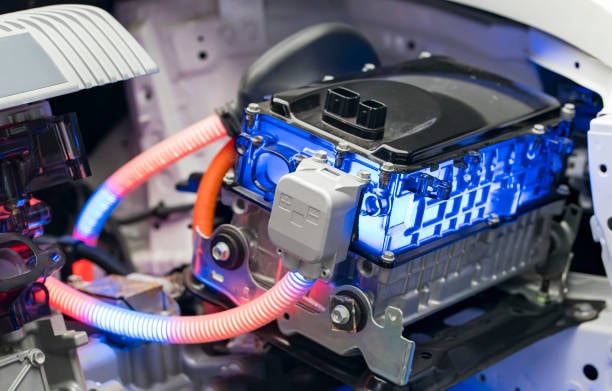
High-performance batteries demand more than cutting-edge chemistry. At CPS, we support R&D and commercial-scale battery production with expert particle size reduction, classification, blending, and surface treatments that meet strict performance and purity standards.
Our expert services provide:
- Tightly controlled particle morphology for enhanced conductivity and reactivity
- Consistent size distribution and blending to optimize packing density and performance
- Surface treatments to improve stability, coating adhesion, and cycle life
- Contamination-sensitive processing environments to protect material integrity
Applications include:
- Lithium-ion and lithium iron phosphate (LFP) batteries
- Solid-state batteries
- Fuel cells and other energy storage systems
- Aerospace and defense-grade energy storage
With custom process development, scalable capacity, and a strong focus on confidentiality, CPS is the preferred toll processing partner in innovating next-generation batteries.
The EV Battery Boom: What’s Driving Growth?
The global battery industry, particularly electric vehicle (EV) batteries, is in a multi-year expansion cycle expected to accelerate through 2030. Demand, production capacity, and investment are all rising rapidly as transportation electrifies worldwide.
How Fast Is the EV Battery Market Growing?
In 2024, the global EV battery demand surpassed 1 terawatt-hour (TWh) for the first time, meaning the total number of batteries produced for EVs worldwide could store over 1 trillion watt-hours of energy. For perspective, 1 TWh is enough battery capacity to power 15-20 million EVs, or the amount of electricity 100 million U.S. homes use in an average day.1
The International Energy Agency (IEA) projects demand to exceed 3 TWh by 2030, representing more than tripling in volume within six years.1 Historic growth is pushing the EV battery market value to an estimated $190-$200+ billion by 2030, with compound annual growth rates (CAGR) around 20%.2
What’s Driving the Battery Boom?
The battery sector is industrializing at scale. Sustained double-digit growth is underpinned by EV adoption, grid storage needs, and global decarbonization goals based on:
1. Rapid EV Adoption
Electric vehicle sales continue to rise globally, with nearly 21 million EV passenger cars and light vehicles sold in 2025 (a 20% increase over 2024).1 As automakers expand EV lineups and governments push electrification targets, battery demand scales directly with vehicle production.
2. Gigafactory Expansion
Battery manufacturing capacity is in a phase of aggressive expansion. Worldwide, major producers are building massive industrial facilities designed to produce EV batteries and renewable energy storage at a scale measured in gigawatt-hours (gigafactories). Strategic locations in North America, Europe, and Asia localize supply chains and reduce geopolitical risk.
3. Technology Advancements
Lithium-ion remains dominant, but advancements in lithium iron phosphate (LFP) and high-nickel nickel manganese cobalt (NMC) cathodes are improving energy density and reducing cost per kWh. Solid-state technologies remain under development but could influence the next decade.
4. Critical Mineral Demand
EV batteries require great amounts of specialized, mined raw materials: lithium, nickel, cobalt, graphite, and manganese. According to the IEA, exponential demand is rising in parallel with accelerated market growth, making extraction and processing these materials a strategic priority for governments and manufacturers alike.
Battery manufacturers require:
- High-purity, battery-grade materials
- Controlled particle size distributions
- Consistent morphology
- Precise chemical composition
Converting mined ore into battery-ready powders involves:
- Crushing and milling
- Micronization
- Classification
- Surface treatment
- Blending
- Drying and conditioning
Because supply bottlenecks are a real concern, processing capacity must be considered as important as raw material extraction in ensuring reliable access to these minerals.
5. Recycling & Circular Economy Growth
Battery recycling is becoming a meaningful secondary supply stream. Recovered lithium, nickel, cobalt, and manganese from end-of-life batteries can:
- Reduce demand in virgin materials mining and extraction
- Lower overall environmental impact
- Stabilize supply chains
While scaled recycling remains relatively small, volumes are expected to become more significant as first-generation EV batteries reach end-of-life later this decade.
Where Is Industry Growth Happening?
- Asia-Pacific remains the dominant manufacturing hub for major brands
- North America and Europe are rapidly scaling domestic battery production due to policy incentives and supply chain reshoring
- Global investment in battery manufacturing facilities continues to accelerate, reinforcing long-term production capacity
1IEA. Electric Vehicle Batteries. 2025.
2Grandview Research. Electric Vehicle Battery Market (2025-2030). 2025.